
on Bilingual
Learning to create a shared visual language
We’ve been working on a thing for a year now. Well, technically it’s many things, but they’re all trying to do the same thing, so for the rest of this story it’s one thing.
It all started a year ago when an old friend called to ask if we could join an exhibition he was putting together to raise funds for a young artist who passed away. We could either submit something we made before or create something new that was inspiring for young artists.
We went ahead and made something new (always choose hard mode).
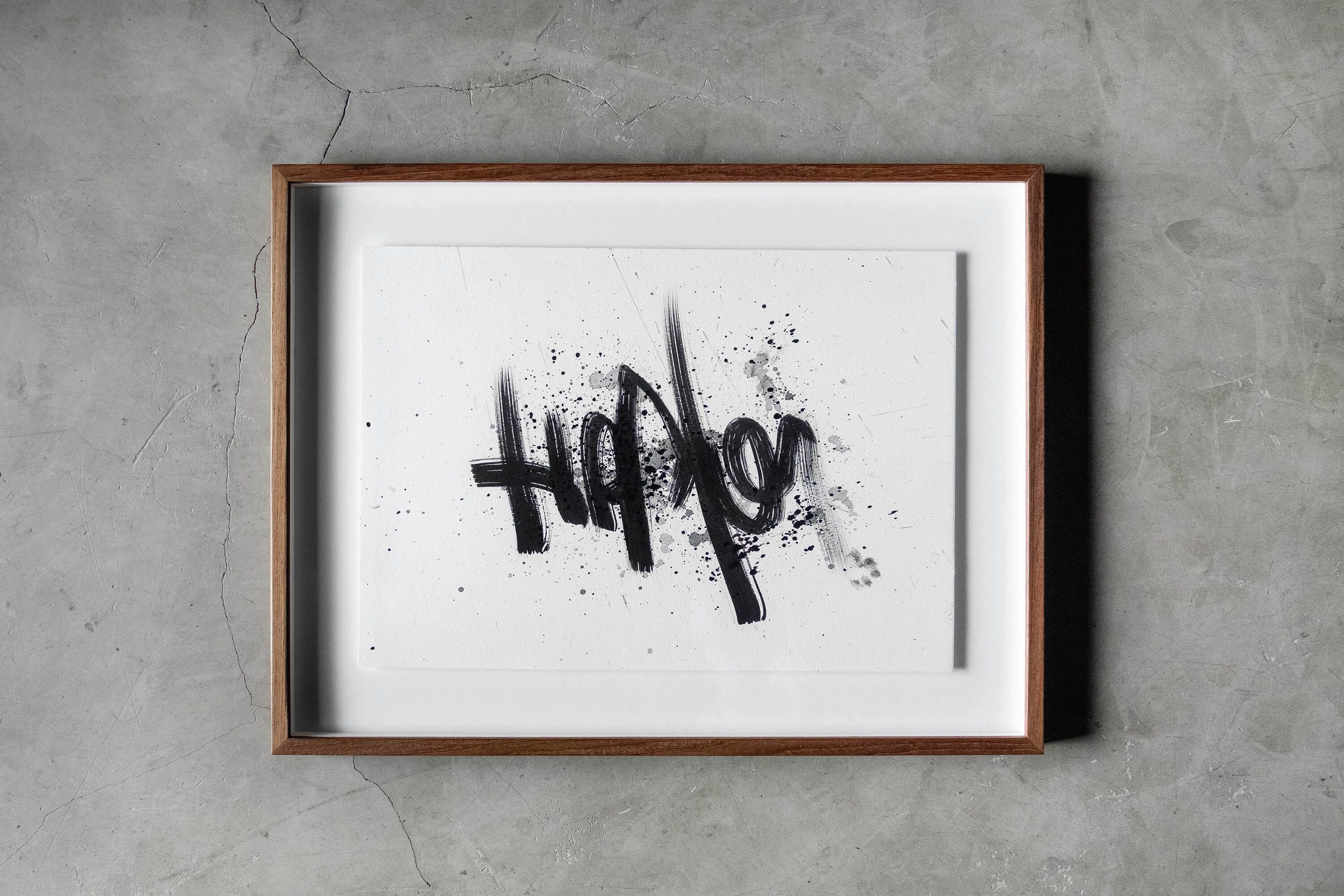
Hard mode, in this case, meant taking the Chinese character 喜 (which means happiness) and manipulating it to read ‘Happy’ in English when turned sideways. Basically hiding something in something.
It turned out pretty well. We submitted it. It was exhibited (thankfully nobody thought it was too dumb an idea to be exhibited). All three pieces sold and the proceeds went to the fund.
That should have been the end of it, but it got me wondering if there were other Chinese characters we could hide English words inside. So we turned it into a side project, or as they call it now, a side quest (these days that might be the more widely understood term).
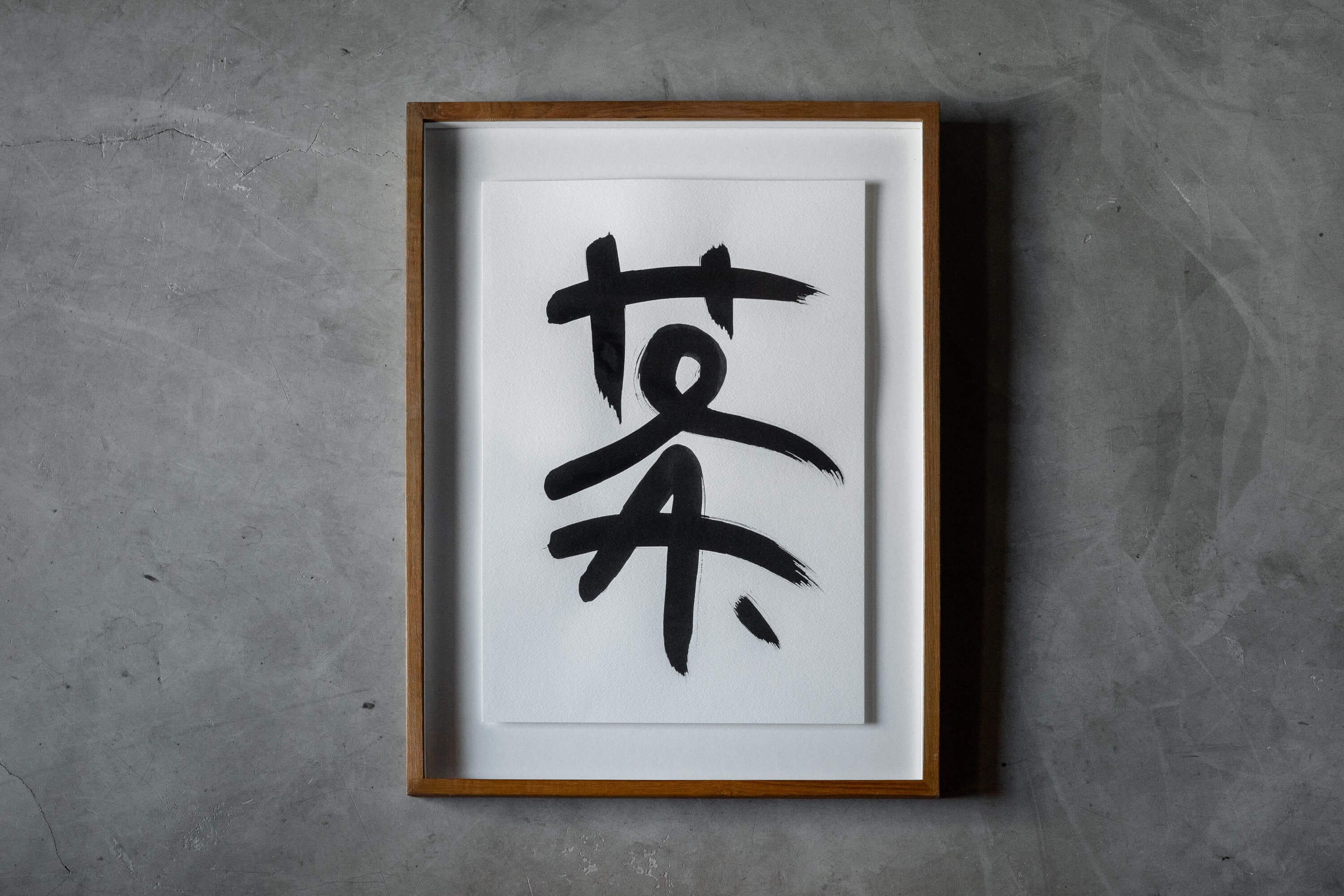
The idea came from an observation I had about language. It started as a way for humans to survive together. Then groups spread out, words changed, and languages ended up doing two opposite things at the same time: bringing people together and separating them into tribes. Bilingual was our attempt at creating a shared visual language by reshaping the strokes of a Chinese character into its English meaning.
So for the past year, every now and then, between other things we were working on, we’d develop a few characters.
Bit by bit. Piece by piece.
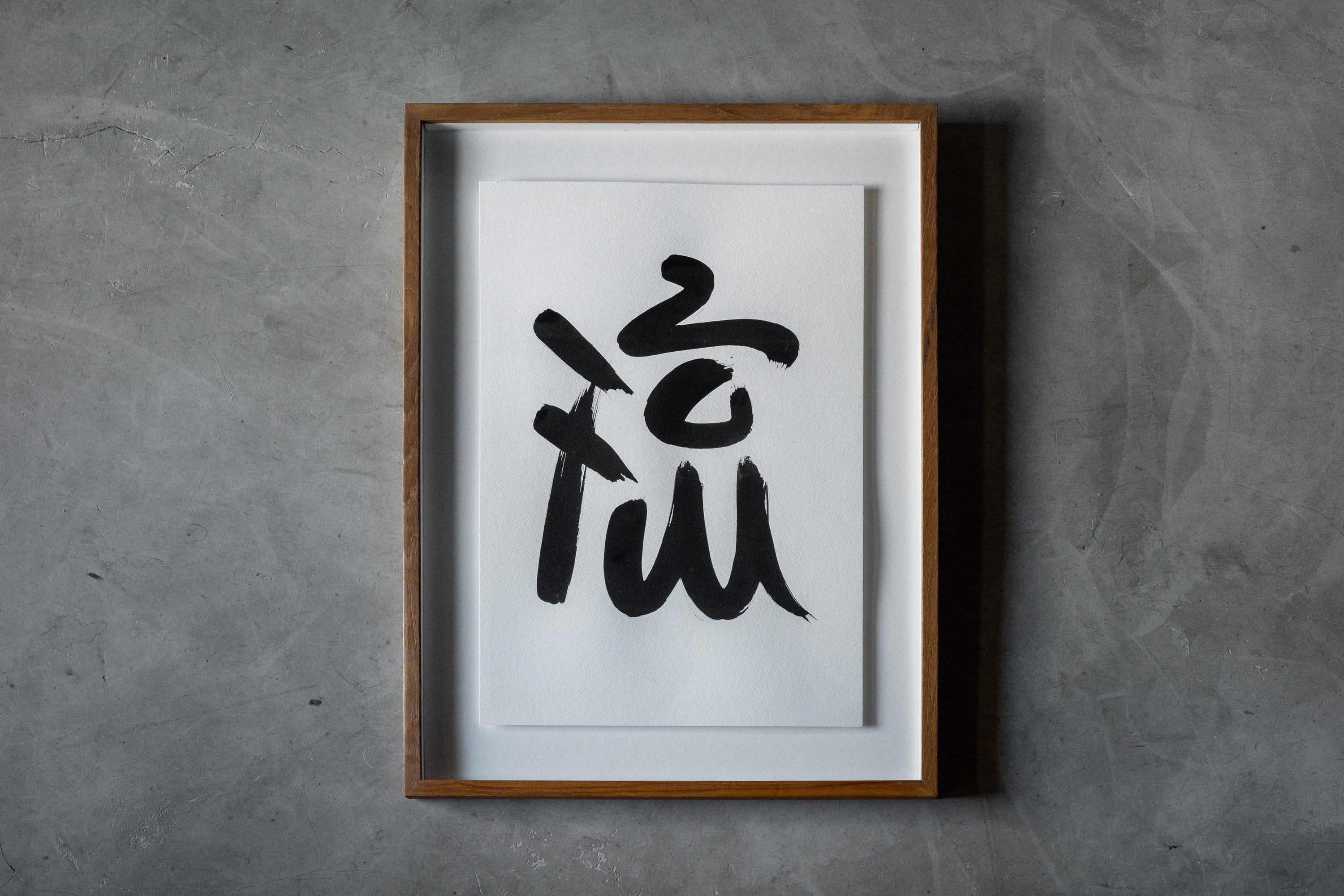
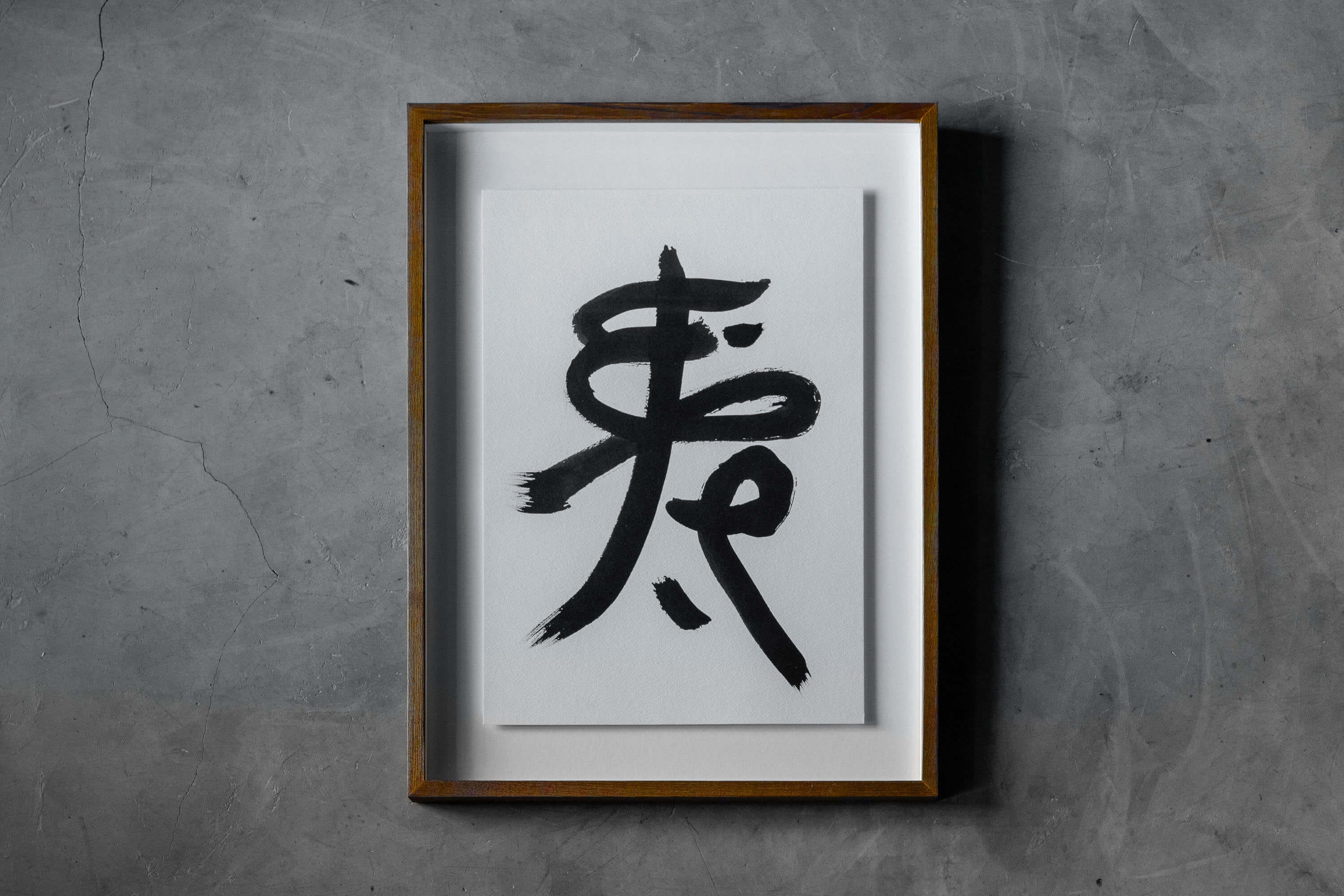
Some worked. Most went nowhere (and some took an embarrassingly long time before we admitted they weren’t working).
Then earlier this year, I got a message from one of the first collectors of 喜. He wanted a few more pieces and asked if he could commission a piece based on 道 (Dao), often translated as ‘Path’. (Funnily enough, his message arrived while I was hiking the Sea Mountain Path in Xiamen, which is a fun thing to do if you’re ever in the city. Even more funnily enough, I recently finished reading the Tao Te Ching, so it felt less like a commission and more like life repeatedly trying to make the same point.)
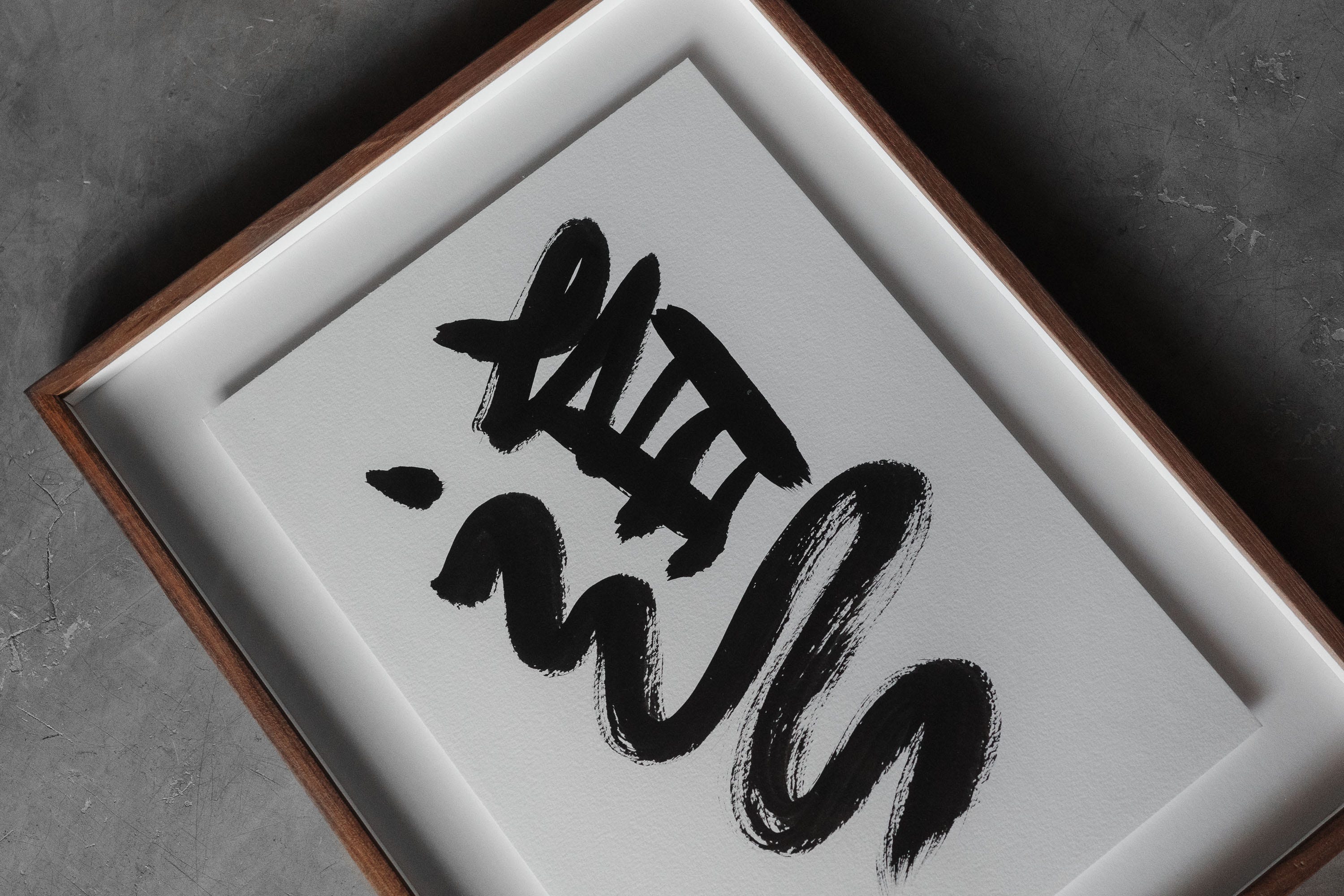
Looking back, none of this was planned. We made one piece for a fundraiser. The piece became a side project. The side project found collectors. One of those collectors commissioned a piece on Dao while I happened to be reading Daoist philosophy and walking up a trail called Sea Mountain Path. At a certain point you stop taking credit for steering and just follow where this thing called life wants to go.
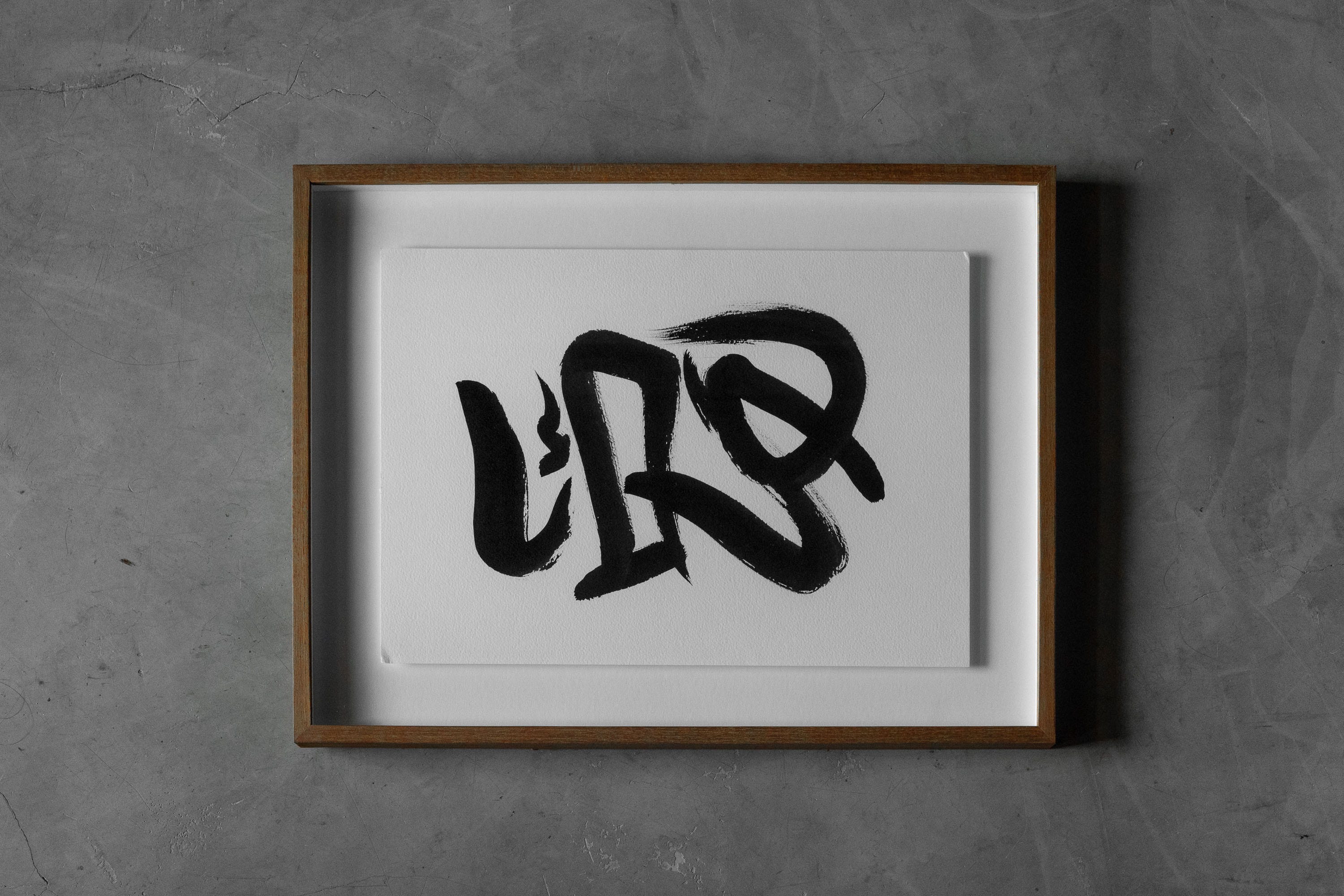
We’re not calligraphers. We never studied it formally and weren’t trying to become artists, calligraphers, or guardians of ancient traditions. It started as a way to see if there were hidden English words inside Chinese characters and also as an excuse to spend more time around Chinese culture, typography, and language. So I’m definitely the wrong person to ask about calligraphy, but after spending a year waving a brush around, a few things became clear.
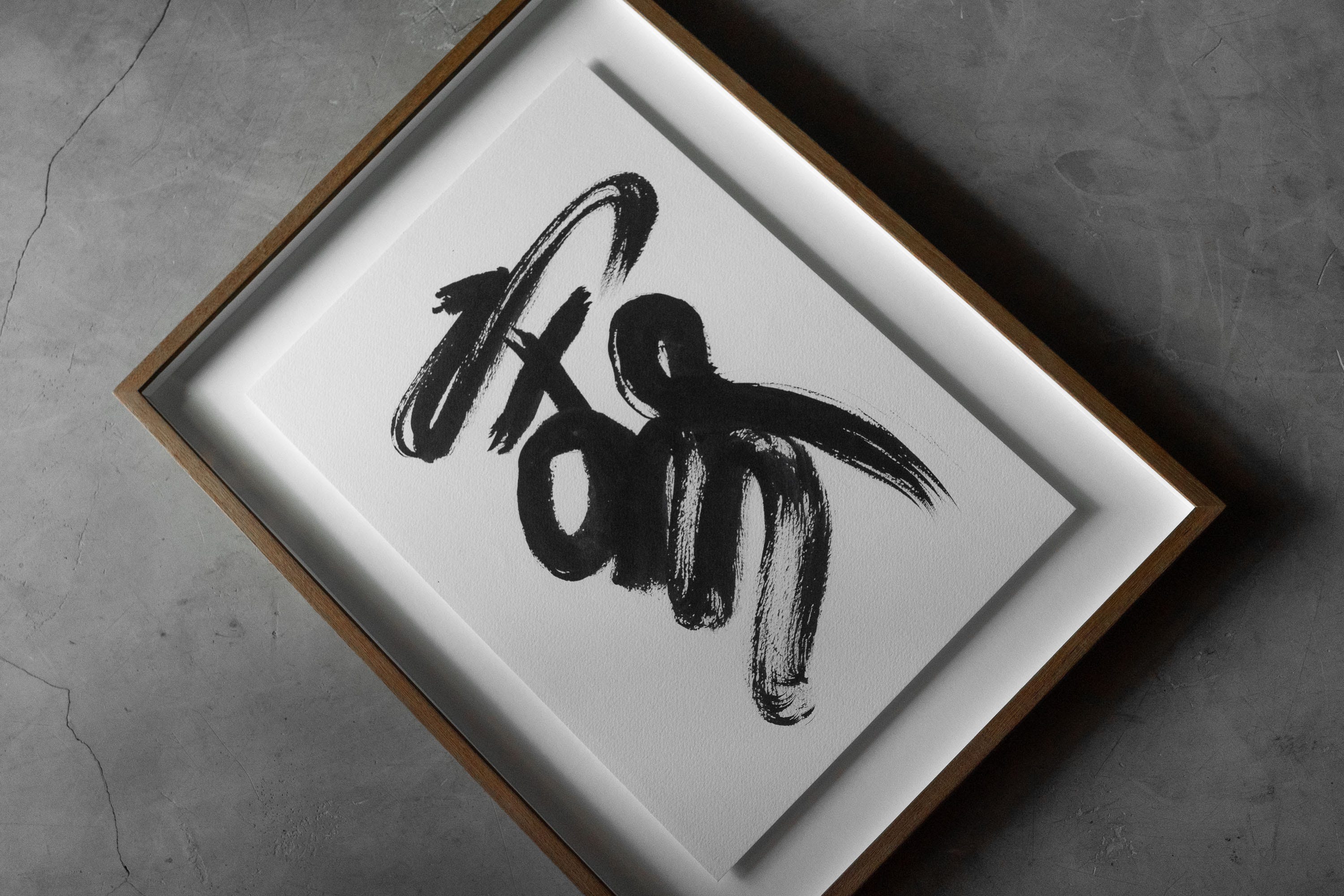
One is that calligraphy doesn’t suffer from the minimum quantity problem. With books, magazines, and prints, you have an idea and somehow end up needing hundreds or thousands of copies before the idea feels real. With a brush and ink, one is enough. Just one. No need to mass produce something for it to sit in boxes in the dark (I wrote about this challenge in this piece on books, if you want the longer version).
Another thing is that the brush doesn’t obey. You can’t control it the way you control a pen or a mouse cursor. The ink bleeds and spreads in ways you can’t fully predict. It’s only half up to you and the rest is up to the ink, brush, and paper. The instinct is to grip tighter and try harder, which is exactly the opposite of what calligraphy rewards. The more you force it, the more it resists. Amusing, because the lesson applies outside calligraphy too.
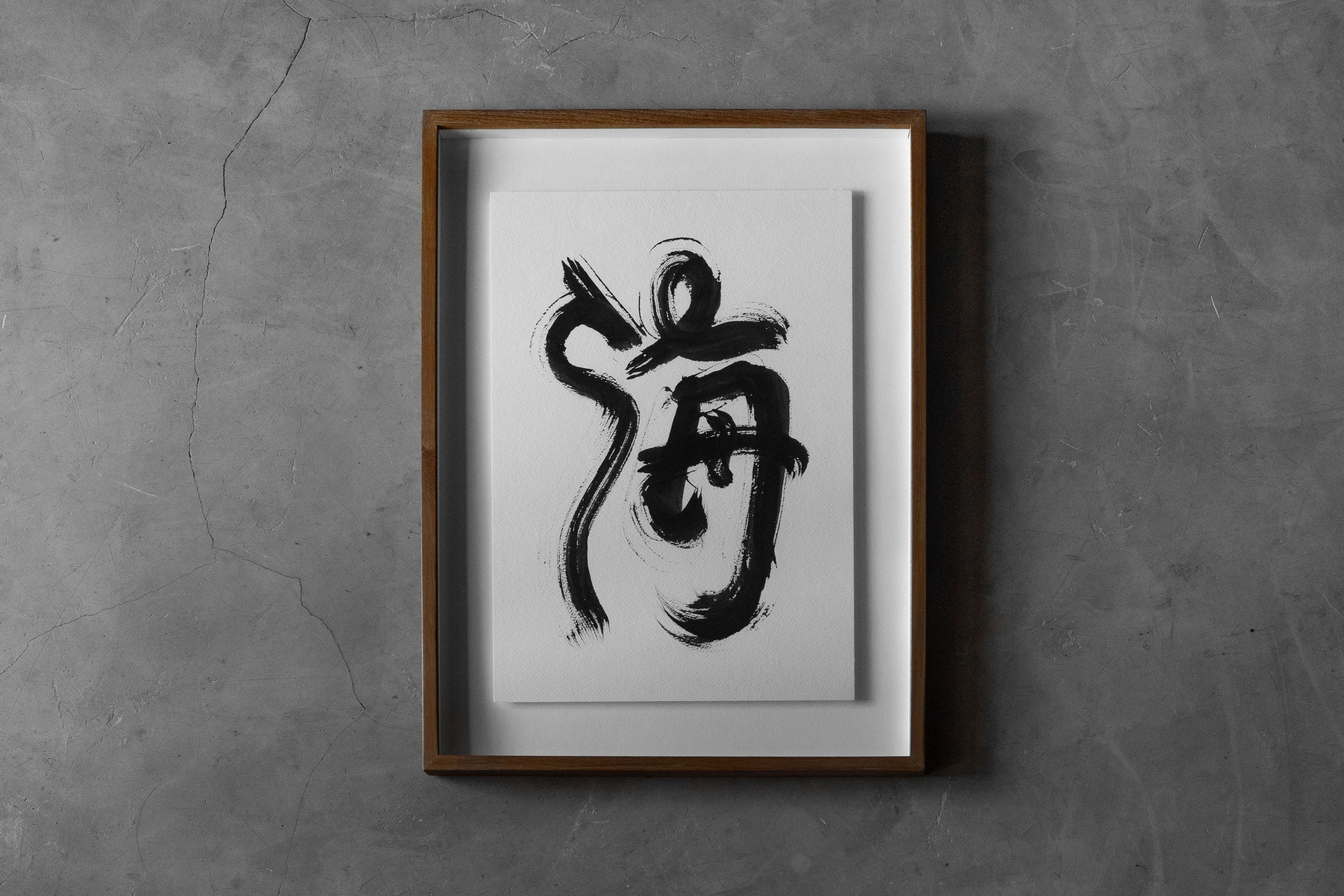
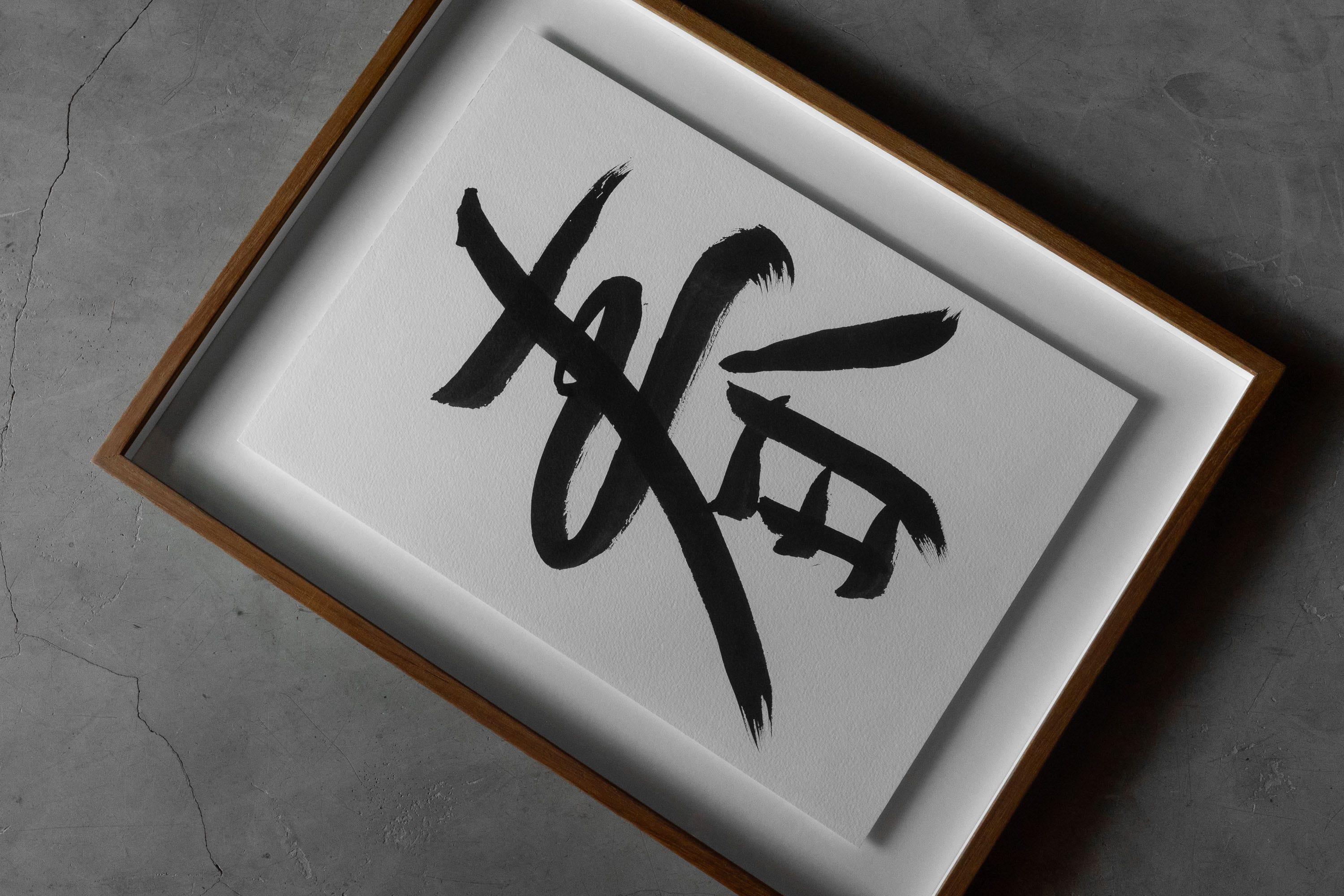
And perhaps the thing I like most about it is that there is no finish line. You can spend decades on it and still feel like a beginner. Which sounds terrible until you’ve spent enough time around goals, targets, launches, milestones, growth plans, and all the other finish lines people invent for themselves. Then it starts sounding quite nice.
Bilingual is an ongoing project and we’ll add to it whenever a character comes along and feels right. There isn’t a deadline or target number of artworks, or a plan, or a goal, or much of anything really. We’re just letting it figure itself out, because clearly it’s not going to listen to me anyway.
—
Felix Ng
Co-founder, Anonymous
@felix.anonymous