
on Books
Learning why books rarely find their readers

"Hello, do you have any books by Thai creators?"
A young Japanese traveller had just rolled in with a suitcase.
"We have a few."
The owner pointed to a small stack on the counter.
"Oh. Okay."
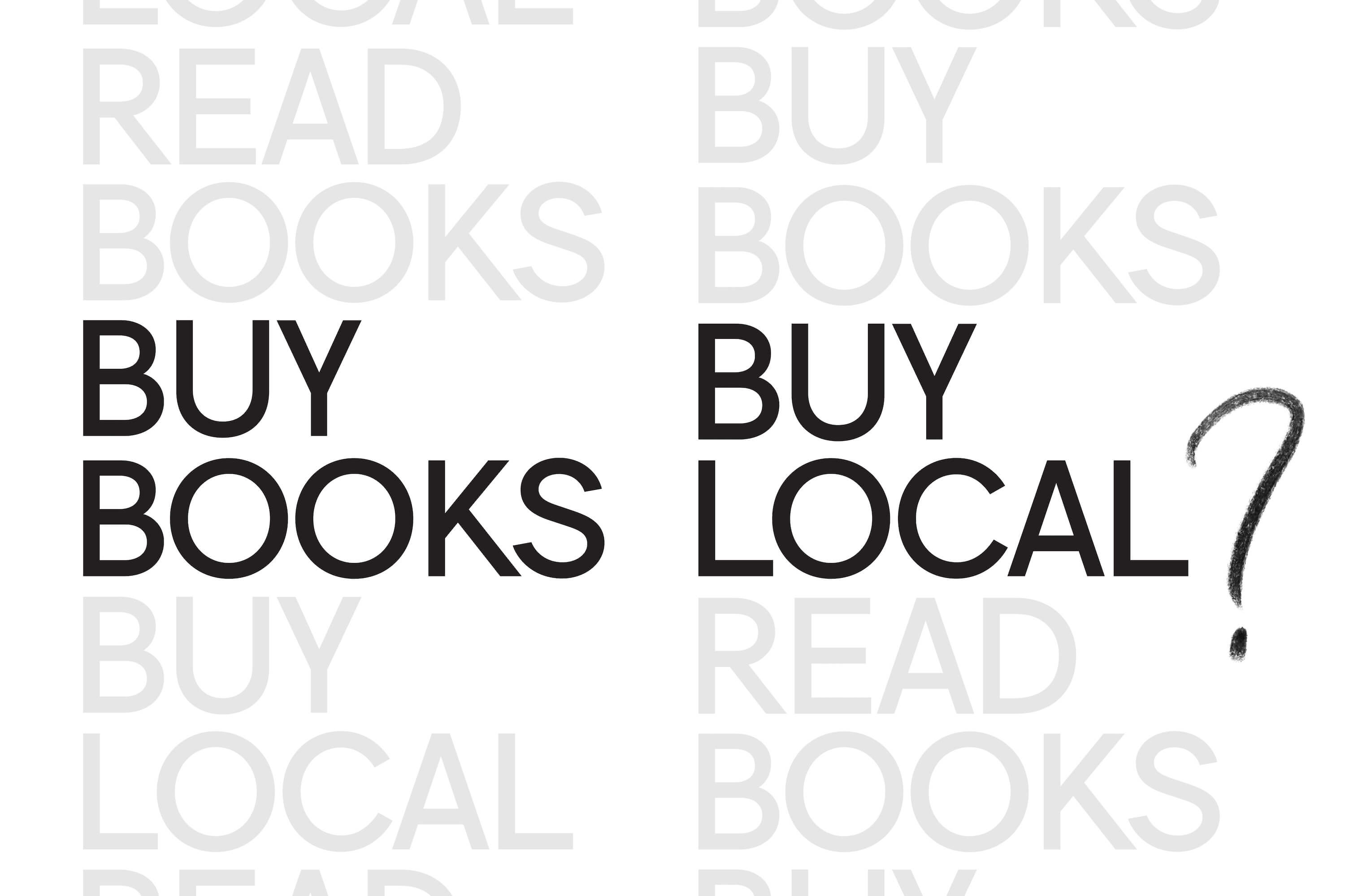
I was in a bookstore in Bangkok that specialised in art books. Outside, a poster read: Buy Books Buy Local. Inside, most of the titles were published everywhere but Thailand.
That joke wrote itself. A bookstore urging you to buy local while stocking mostly foreign titles felt like a McDonald's with a sign outside that said eat healthy.
Bookstores are curators, sure. But they are also middlemen. And middlemen have rent to pay. So they stock what is known and what sells. That’s why you rarely see the obscure, the small press, or the just plain odd books in most shops. Not because it doesn't exist but because it doesn't move.
What the Poster Didn't Say
If you love books, actual paper ones, you may or may not know how the business works for small independent publishers. Here is the not so secret machinery. It is not pretty, but neither is most machinery.
Before a book even reaches a store, it has to be printed. Say it retails for $20. Printing might cost between $3 and $5 per copy at a run of 1,000, which is often the minimum before a printer is interested. And 1,000 copies is not a small number. Not if you are one of the many hopeful small publishers you see at book fairs.
Print fewer, say 300 or 500, and the unit cost jumps to $5 or even $10, depending on paper, binding, special finishes, and how ambitious you got at 2am when you were still convinced this was a good idea.
Printing alone takes around 30 percent of the retail price.
Now, back to our friendly neighbourhood store.
Bookstores take between 30 and 60 percent of retail, depending on the deal. On consignment, meaning the publisher places books in the store and only gets paid when they sell, the publisher gets maybe 60 to 70 percent of whatever comes in. If the store actually wants your book badly enough to buy it outright, which is rare for small publishers and they know it, they will pay roughly half the retail price. Sometimes even less.
Quick recap.
Stores take 30 to 60 percent.
Printing takes around 30 percent.
The publisher keeps about 10 percent. On a good day.
That is barely enough for a meal at McDonald's. Not even the “healthy” option.
But wait, there's more. As they used to say on TV.
Art Book Fairs
The night markets of the publishing world. Loud, sweaty, and suddenly everywhere.
Art book fairs started in Japan in 2009, then spread. In Asia alone there is now a circuit running from October to December, covering Tokyo, Seoul, Bangkok, Singapore, Kuala Lumpur, and more cities every year. Which either means the movement is genuinely growing or everyone is just looking for somewhere to put their boxes of unsold books.
For a few days in each city, small publishers rent a booth, dress it up with magazines, books, posters, and stickers (there are always stickers). For a weekend, at least, it feels like a community. Or as if they are in a band, on tour, except the tour is mostly book fairs and the rider is a foldable table.
The energy is good. I have been to enough of these to know that part is real.
Here is what is also real.
Booth fees run from $150 to $450. Some organisers take a cut of sales on top of that. Fair enough. Venues cost money, tables cost money, and someone with mostly good intentions spent most of the year securing the space, renting the furniture, and herding everyone into the same room at the same time. It is only fair that exhibitors cough up a few hundred dollars for the chance to meet other creators, potential readers, and people who will photograph their stickers but not buy anything. I have been there. I get it. It cannot be free.
But the books on those tables probably took most of the year to make too. And they will be visible to the public for exactly three days.
Three days out of 365. Then back into a storage room, or a studio corner, or wherever books wait when no one is looking at them. Not as an image on Instagram. As an actual object, sitting in the dark, hoping someone remembers it exists.
Here is the part nobody puts in the recap post.
Not everyone doing this has deep pockets or a large inheritance or an investment portfolio paying out dividends every month. The money to cover flights, accommodation, food, transport, booth fees, and the cost of shipping the books and the merch and the display materials to each city has to come from somewhere. And this is not one fair. It is a circuit. Multiple cities. Multiple tables. Multiple boxes that need to get there and, eventually, back.
A lot of money. A very small window. A lot of stickers that didn't sell.
Bookstores don't make it economically viable. Book fairs don't make it economically viable. And yet people keep making books, packing them into boxes, rolling suitcases through airports, setting up tables, and selling them one by one to strangers who spend four minutes deciding and then buy a tote bag instead.
So Now What
The obvious answer is buy direct from the author or publisher. Cut out the middlemen. Keep the money where it belongs. We say we want to support independent publishers, and buying direct is the best way to do it.
Good idea. Mostly unworkable.
I tried this recently. A small publisher in the US, a book I had been looking for and couldn't find anywhere locally, 300 pages, about half a kilo, $30. Reasonable. So I clicked add to cart, then the bright blue checkout button, typed in my name, email, mailing address, and waited.
The cart refreshed. Shipping to Singapore: $40.
That is the moment the brain switches modes. Not the part that loves books. The other part. The part that does math. And the math said: you are paying more to move the thing than the thing costs.
So, unless FedEx and DHL decide overnight to become nonprofits and offer free shipping to everyone, everywhere, out of the goodness of their hearts, which has roughly the same probability as a fast food chain switching to organic beef, it is not really a solution.
Bookstores stock what sells. Art book fairs exist for three days a year. Buying direct costs nearly double by the time the shipping calculator is done with you.
There is no clean answer here. The system works. Just not for the readers, the people who make them, or the books (who by the way are still in a box, in the dark, waiting).
New Library
There is a fourth option. Or at least there was.
A few years ago, we started working on something called New Library. A private library focused entirely on creative culture. Books, magazines, zines from independent publishers around the world, organised by country, covering art, design, fashion, food, architecture, photography. The kind of publications you see online but will probably never hold in your hands. The kind that never make it into bookstores because they don't move fast enough, and never make it to book fairs because you weren't in the right city on the right weekend. And even if you were, some of these books cost $50, $100, or more. When the average monthly salary of a young designer in Bangkok is around $500, owning one is not really a decision about taste. It is a decision about rent.
The idea was simple. Pay the price of a movie ticket. Get ninety minutes with some of the most interesting publications being made anywhere in the world. Not a co-working space. Not a cafe. Not a place to hang out. Just a library where reading is the whole point. A radical concept, apparently.
We would buy books from creators at full price. No consignment, no 40 to 60 percent cut, no waiting to see if it sells. They get paid. Visitors who find something they love get sent straight to buy directly from the publisher. The math, for once, works in the right direction.
Bangkok was where it was supposed to happen. A city full of people making things, most of whom have never been able to afford the books that might inspire them to make more. We presented the concept to a museum. They seemed genuinely interested. Then they ghosted us. Which, to be fair, is something of a national pastime.
A few months later, something that looked quite familiar opened its doors.
Maybe it was a coincidence. These things happen.
The books are still in boxes. In the dark. Patiently waiting. New Library is still an idea looking for a space. The museum that ghosted us is still open, presumably doing museum things.
Somewhere out there, a young designer is probably on Instagram, looking at a book they will never be able to afford, made by someone who keeps about 10 percent of what it sells for. That someone spent most of last year making it. They will spend this weekend at a book fair trying to sell it. They will sell a third of what they hoped and come home with more than they left with (mostly other people's stickers), because the very people who can least afford to buy books are the ones who most want to.
The book will go back in the box. The designer will keep scrolling.
The book exists. The reader exists. Nobody has figured out how to connect the two without taking most of the money.
—
Felix Ng
Co-founder, Anonymous
@felix.anonymous
P.S. If you’ve made it this far, I already have enormous respect for you. Please don’t feel obligated to subscribe, because it’ll be heartbreaking when you inevitably change your mind and unsubscribe. If you’d prefer this in shorter, less considered bursts with a significantly higher chance of me regretting posting things, I’m on Threads. And if after all of this you still want more, there’s a subscribe button somewhere on this page.