
on Vessels
Learning how vessels give the stuff we make meaning

"Anyone else having low engagement? I'm tired of posting. No matter how much I do, what's the point if my followers can't even see what I post? Crying emoji.”
That has been the main conversation about social media, on social media, for the past five years. People in full meltdown about the algorithm, about how its capitalistically evil ways have turned their once beloved things into pseudo TikTok, Pinterest, Snapchat, or whatever else each thing is desperately trying to be this quarter. It is a business, of course it's going to maximise for profit. This apparently still comes as a surprise.
Some think the answer is posting more. Or making videos. Or creating slideshow decks and calling it a carousel. Or, when push comes to shove, pivoting to move their audience to newsletters or Discord (not going to happen, we are passive, remember? and would much prefer you water everything down and serve it directly into the feed). Some are paying the thing to boost their posts. Others are paying strangers to like them. Both are exactly as depressing as they sound.
Every single one of these workarounds is exactly what the thing wanted all along. More posts. More time on the thing. More money spent.
There is always something the thing wants you to do. In most places they call this manipulation. In the tech world, they call it user experience.
Recently the head of one of the things came out to say that the traditional feed of square photos is dead (oh, really? we didn't notice). He also said AI is coming and everyone should post raw unpolished images so people know they are human.
So let me get this straight. The same thing that built tools for us to create AI images now wants us to post blurry photos taken in bad lighting to prove we are human. Useful news for the people who just bought a new phone because it has a better camera. Devastating news for anyone who has spent decades learning how to use one professionally. Great news for everyone else who were already taking blurry photos in not so great lighting.
That is the equivalent of asking a chef to mess up an omelette to prove it was made by a person and not a microwave. The omelette suffers. The chef suffers. The microwave does not care.
And yet, here we are. Nudged (being kind here, the less generous words are forced and manipulated) into making more content, trying harder, and generally getting less back. No amount of better content fixes a thing working against you.
The problem isn’t the stuff being made. Or that there’s too much of it (there has always been too much). The problem is where we’re putting it.
And what we put stuff in, let's call them vessels.
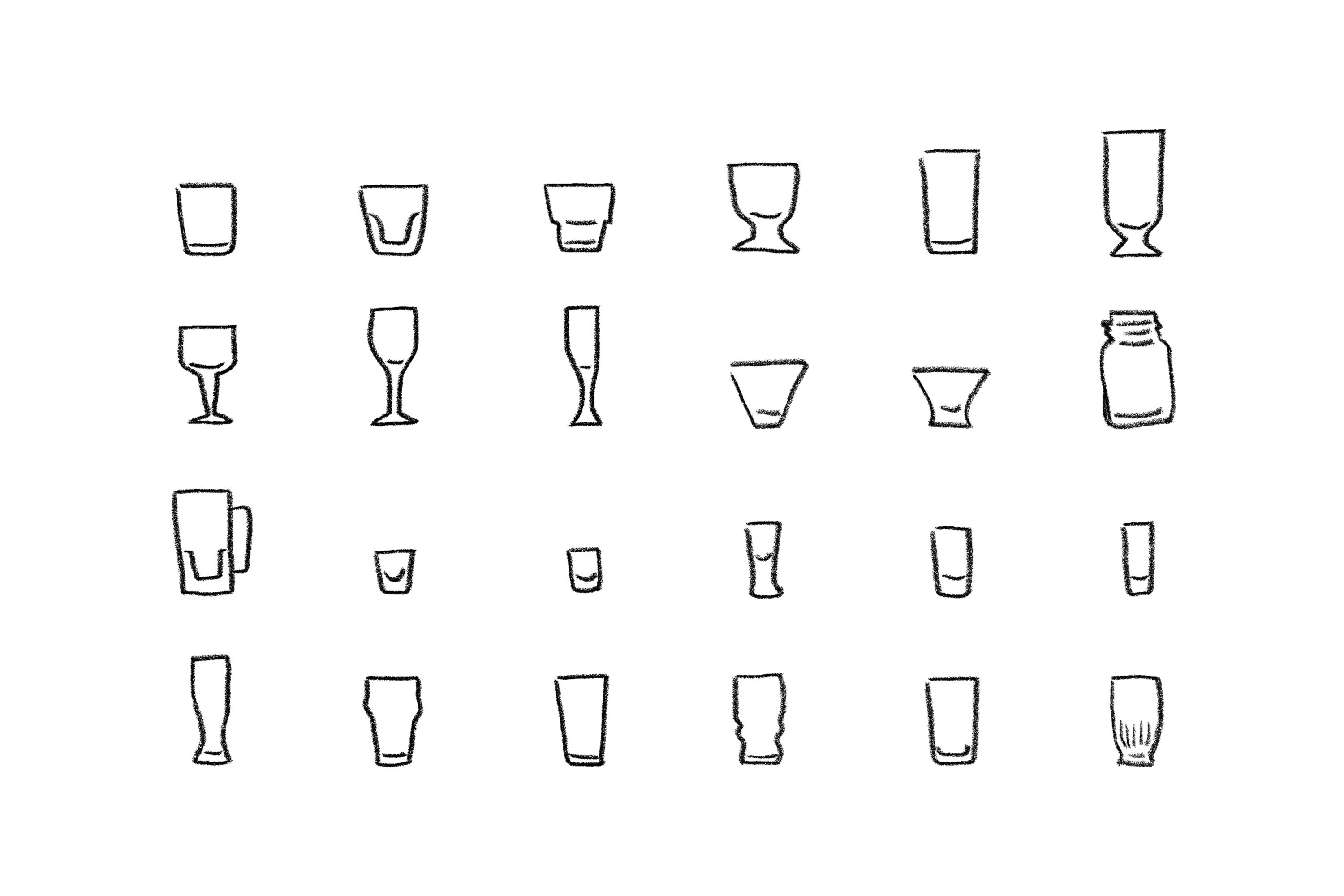
Vessels?
A vessel is a container. A glass, a bowl, a mug, a tupperware, and even that jar of peanut butter you stick your finger in when you thought no one was looking. Yes, that one. Vessels hold things before we need them. They come in all shapes and sizes.
But what I really mean by vessel is a container that gives things meaning. A museum turns an object into art. Move the same object to the street and suddenly we call it junk or vandalism. Same object. Different vessel. Completely different meaning. The art was never the point.
Bookstores are vessels. Without books, just a sad empty room with shelves and a lot of opinions. A cinema without films is just a room with expensive chairs. You get the idea.
Most of them, especially the ones we have been putting stuff into for the past few decades, have gotten a lot worse at their jobs.
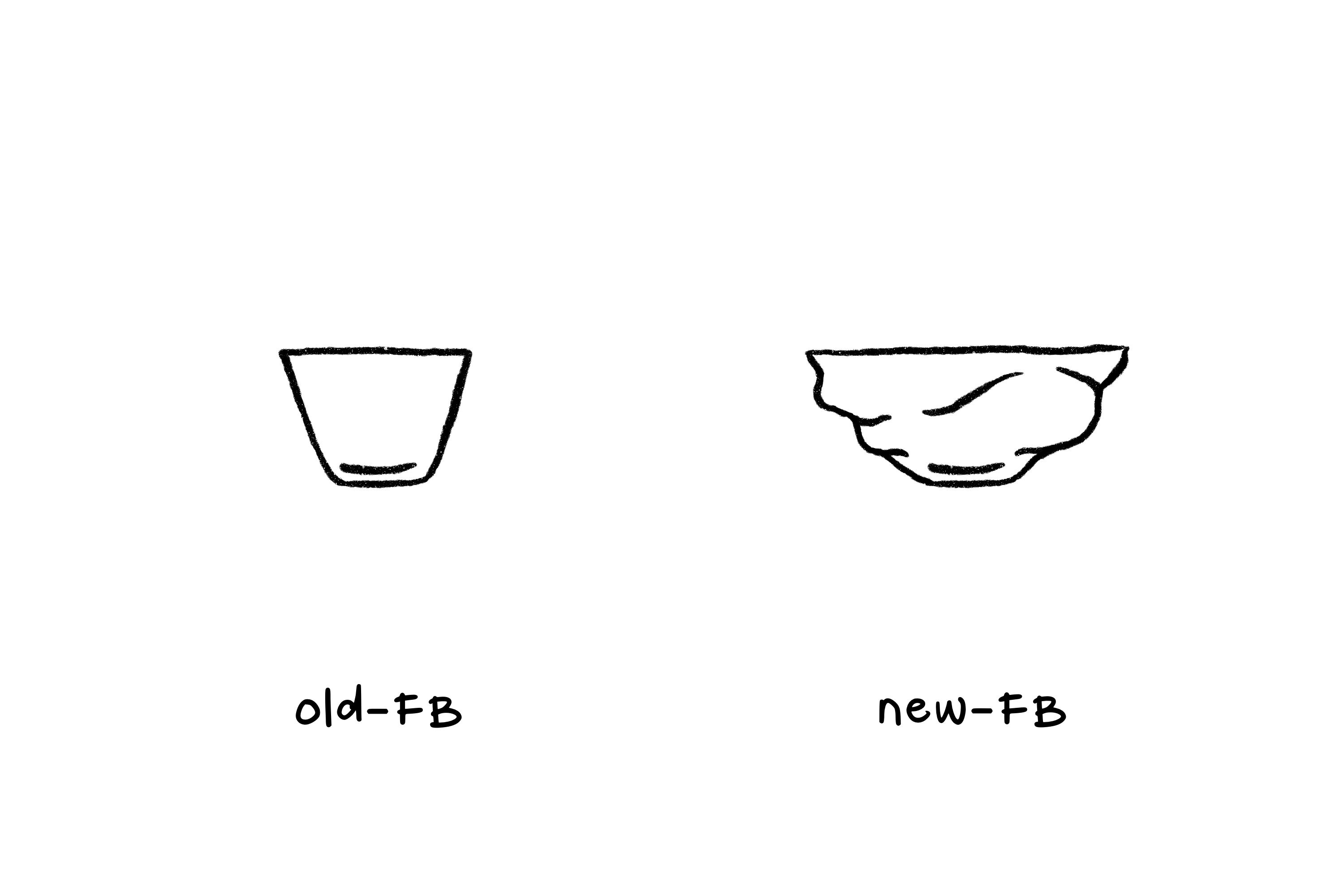
Old Facebook was a clean simple bowl. Specific context, specific people, clear purpose. New Facebook is the same bowl after someone sat on it. Still technically a bowl. You open it and are genuinely unsure why.
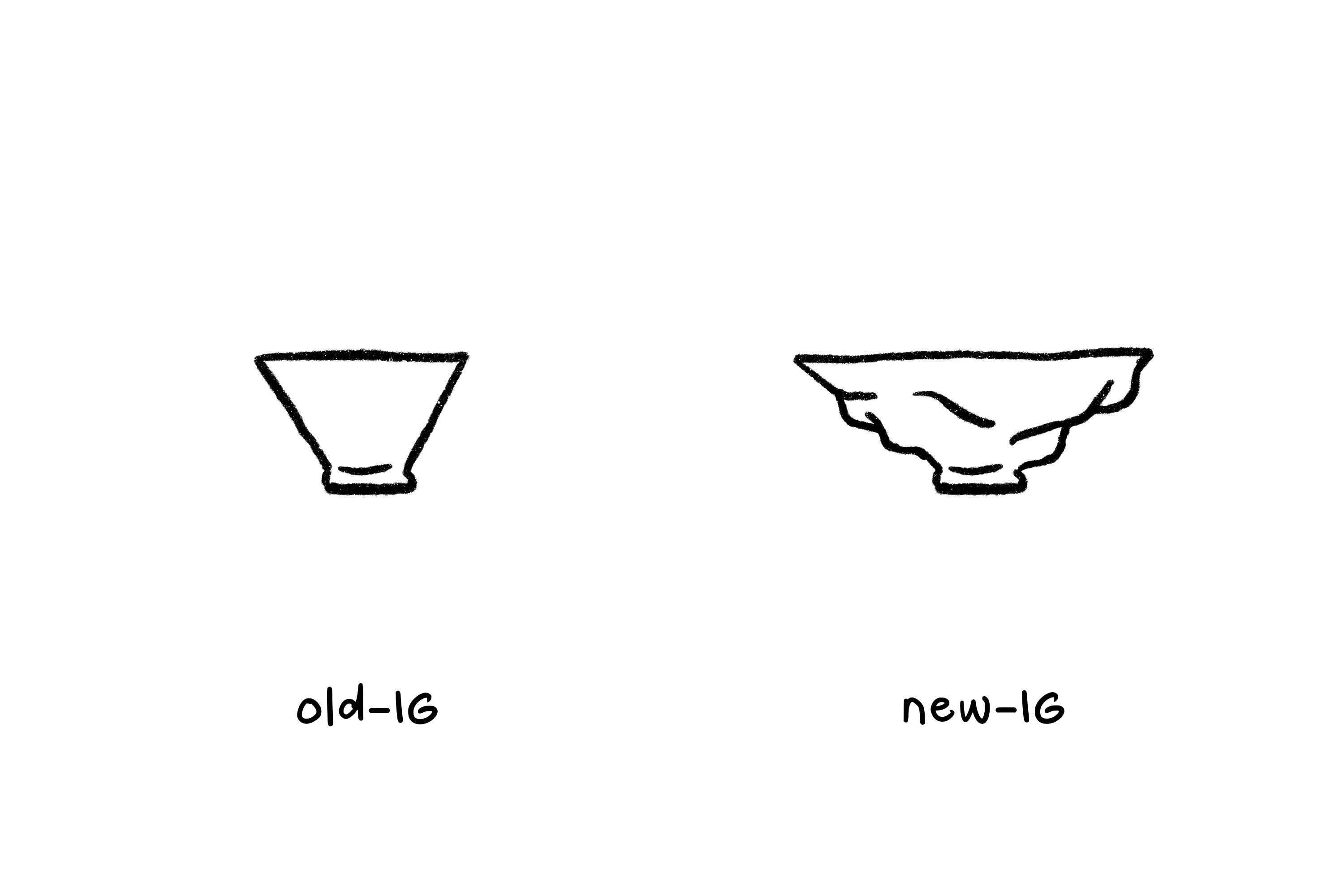
Old Instagram was a narrow bowl with clean edges. Photos only. New Instagram is wider, flatter, more cluttered, and whatever else was added when someone got drunk on kombucha. The original bowl is technically still in there somewhere. Buried.
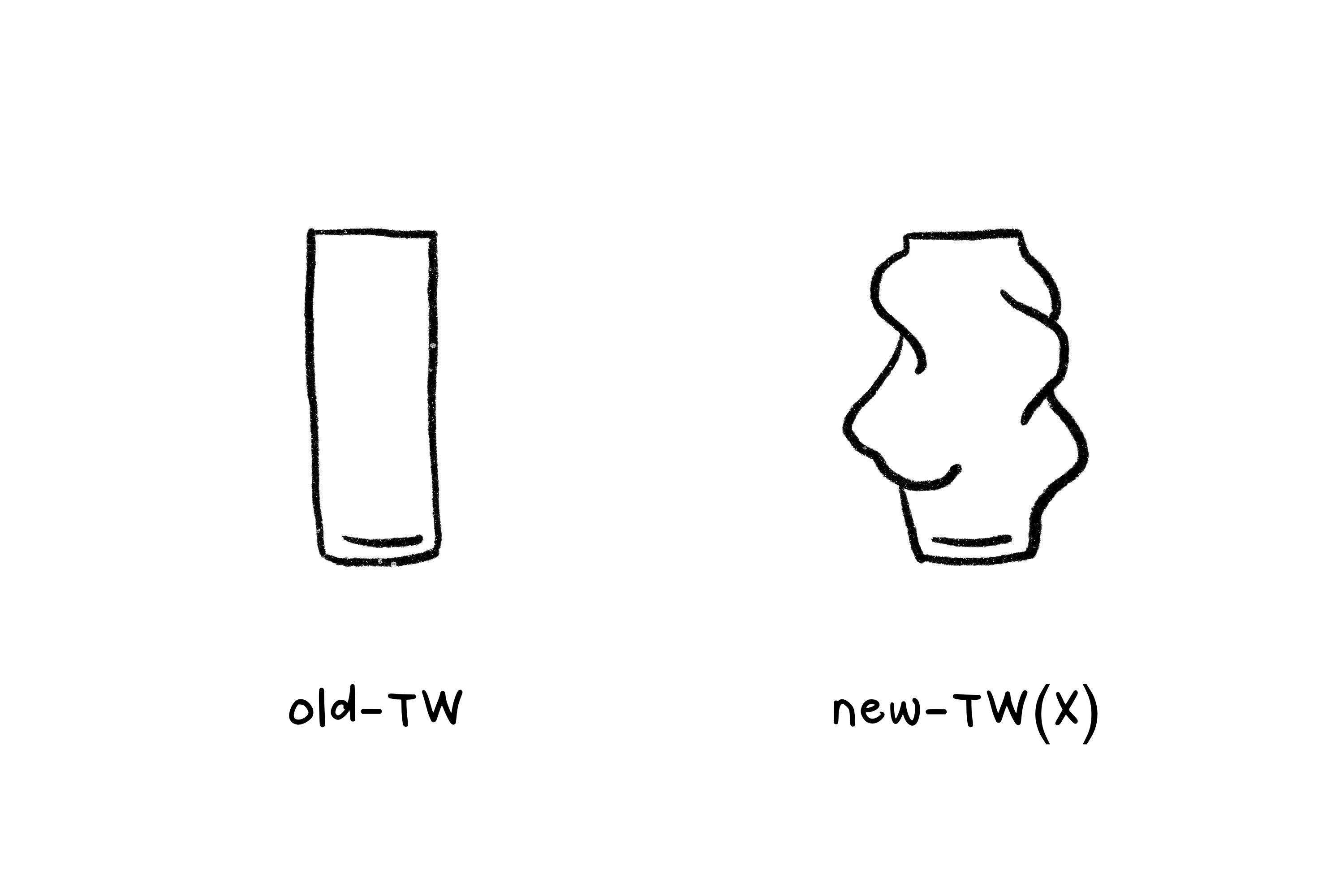
Old Twitter was a tall clean glass. Narrow, elegant, specific. A vessel that knew exactly what it was. New X has the walls bulging outward in every direction, twisted, barely recognisable. Same name. Completely different object. One previous owner.
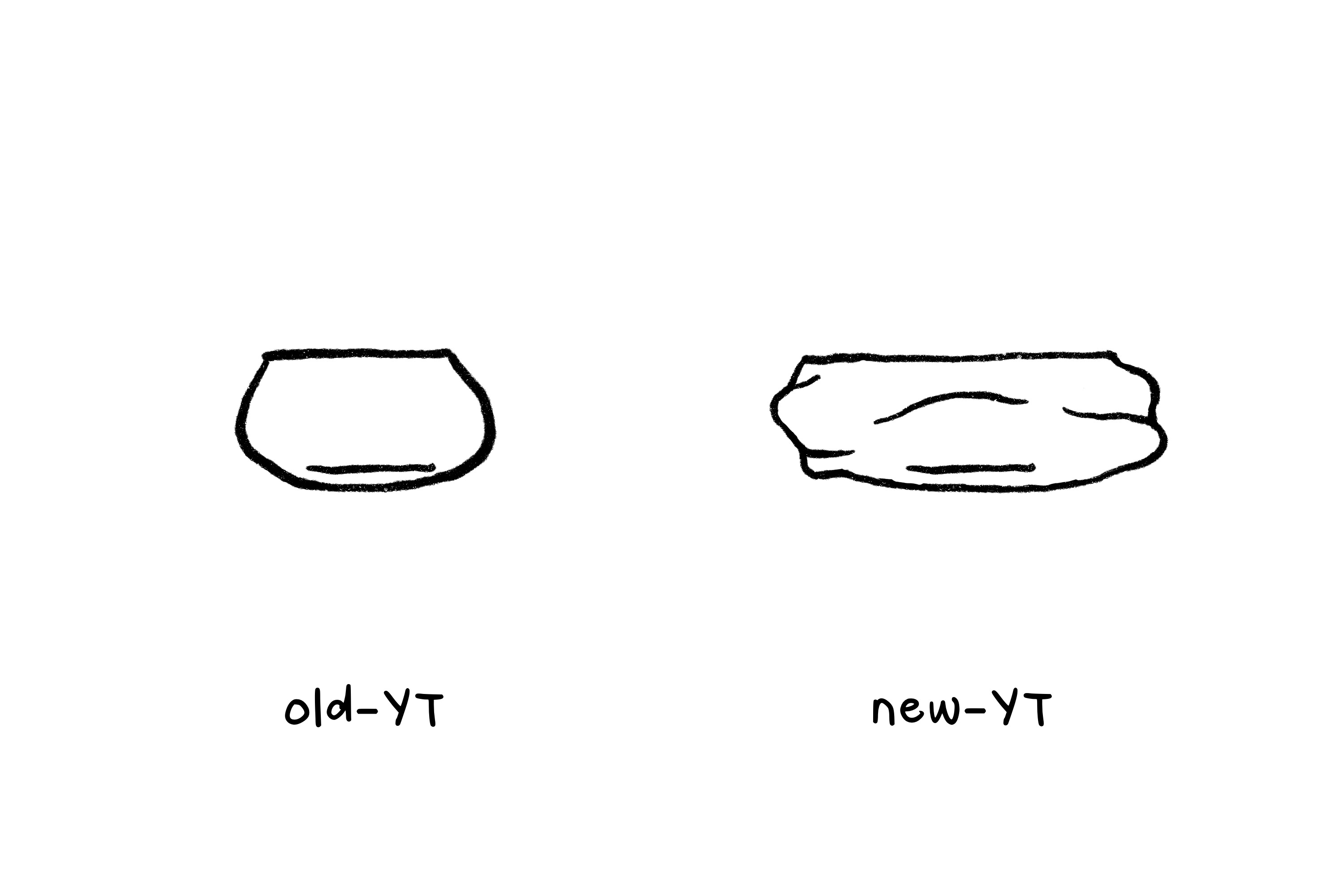
Old YouTube was a round compact bowl. Videos you searched for on purpose, made by people who had no idea what they were doing yet. You came, you watched, you left. New YouTube got flattened and stretched sideways. The algorithm pushes whatever keeps you watching longest. Which, it turns out, is frequently things that are not true.
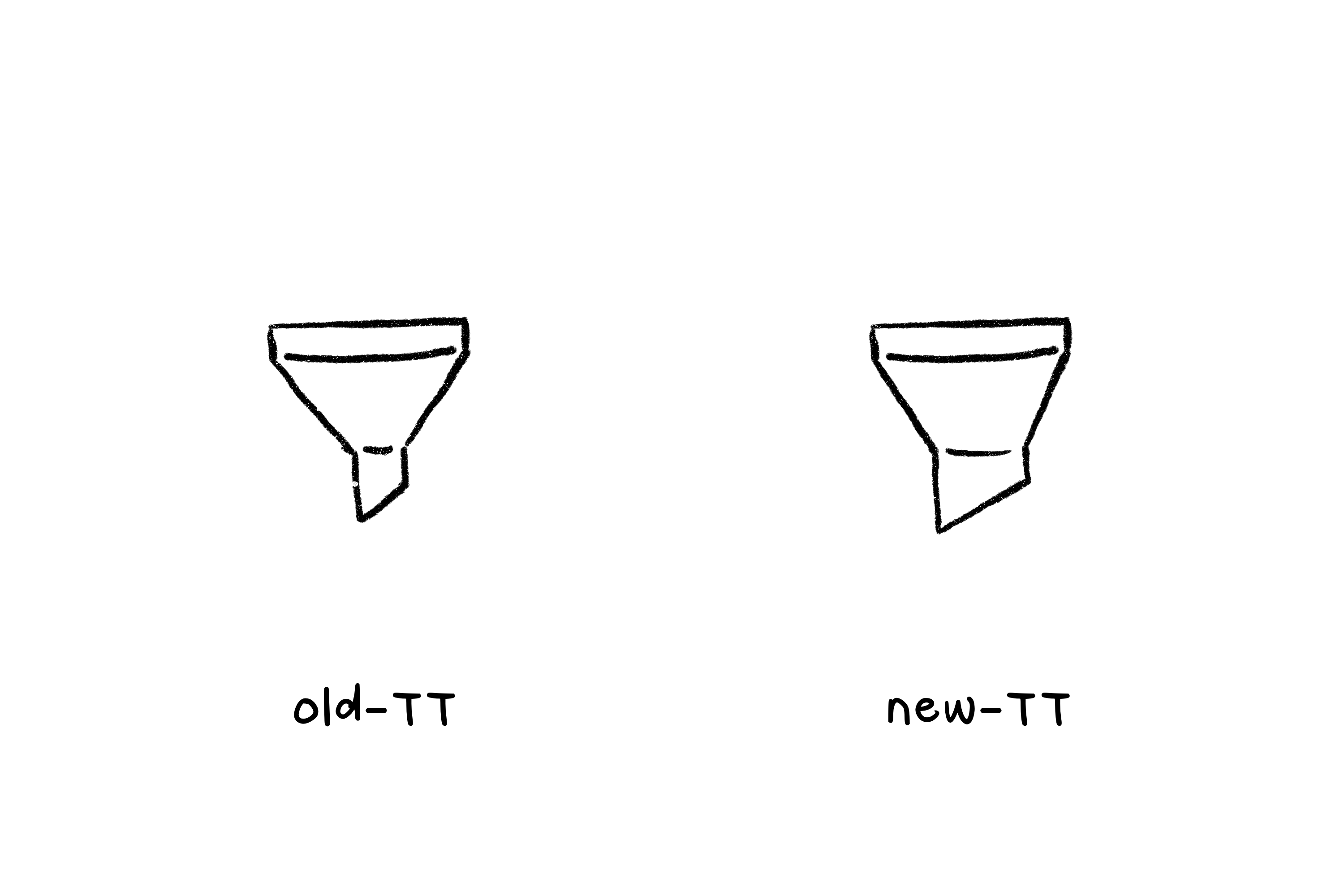
TikTok was never really a vessel. More like a funnel pointed at you. Started as teenagers dancing. Now it’s the internet inside the internet. Same funnel, just wider and significantly better aim. You don't choose what comes next. You just get waterboarded by content.
The vessels we’ve been putting stuff into for the past two decades grew in every direction except the right one. Wider base. More cluttered. Forgot what they were mostly for but kept the same name.
Or, said less elegantly, they just went to shit.
What Makes a Vessel Work
A well-designed vessel knows what it is for. More importantly, it knows what it is not for.
The vessels we used to love, now mostly gone or forgotten (like that old aunt you sent to a home and promised to visit but never did), they mostly existed for a single purpose. Nobody asked them to be more. They were fine being what they were.
Flickr for photos. Ffffound for discovery. Tumblr for micro blogs, quotes, memes, and whatever strange obsession you had and called a hobby. Each did one thing well. We had these. We loved these. Then the bigger things looked over, liked what they saw, and absorbed what made them special into everything else they were already doing. The originals became irrelevant.
A well-designed vessel doesn’t require you to perform or be publicly judged by strangers at all times. The like count, the follower number, the engagement rate, the weekly dashboard that arrives in your inbox to remind you how invisible you are (except to that old aunt still waiting in the home who watches and likes everything you post without fail, god bless her). These are design decisions, not facts of nature. Someone somewhere knew humans are wired to measure themselves against others and decided to make that addictive. One of the things actually tested hiding like counts. Engagement dropped. They brought them back. That tells you everything you need to know about whose interests the like count actually serves.
Think about your favourite mug. Now imagine it liked when you poured coffee in but withheld approval when you poured water. You would become very conscious about what you put into it. You would start performing for the mug. You would optimise for the mug. You would never again just make a cup of tea without first considering whether the mug would approve. You might even start making tea that tasted like coffee just to keep it happy. Eventually you would forget you ever liked tea in the first place.
That is what happened to the thing.
What Comes Next. Or Is Already Here.
Honestly, I have no idea.
Most likely not back to one thing that connects everyone and everything. That era is mostly over, except for some places where people still need to document every meal, every outfit, every moment of every holiday, and every minor life milestone to signal to their friends that they are someone. You know who you are.
What seems more likely is fragmentation. Smaller communities. Vessels built for specific people and interests rather than everyone and everything. Some of these vessels already exist. Most people have never heard of them. That is not a coincidence.
Private group chats. Small, closed, lidded. Just people who actually want to hear from you. The vessel that was working all along while everyone was busy complaining about the feed. The oldest new idea on this list.
Direct to audience. Substack, Ghost, or a simple mailing list. A direct line between one person making things and the people who chose to receive them. The subscription is the lid. You chose to be inside it. The only thing deciding who sees what is whether they wanted to.
Private collaborative spaces. A sealed vessel with a password for a lid. DFOS (Dark Forest Operating System) by Metalabel is built on a simple idea: the public internet has become so overrun that the only sensible move is to disappear into the trees in small groups with people you chose, without an audience. Which sounds less like a theory and more like a nice weekend.
Three categories. Three needs. Belonging. Making and sharing. Building together. Which is also, more or less, everything the broken vessels used to promise and stopped delivering.
Make Vessels, Not Content
Building a vessel is harder than filling one. Which is exactly why it is worth doing. AI can fill a vessel. It cannot build one. Yet.
It learns from what has already been made, already been said, already been asked. What it cannot do is start from nothing. From a hunch. From a feeling that something is wrong without knowing what yet. There is no dataset for that. The ability to think of new questions is still human territory. For now. Enjoy it while it lasts.
The work worth doing is not making more content for vessels that are already broken. It is building vessels that give the stuff we put in them meaning. Small ones. Focused ones. Ones that know exactly what they are not for.
( )
Many years ago, I was at the Muji flagship store in Ginza, Tokyo. On the top floor there was an exhibition built around a single incomplete sentence.
"Design is ( )."
That is it. The whole exhibition. A bracket, waiting to be filled by whoever stood in front of it. Simple idea. The kind of question that sounds too obvious to ask. And yet nobody had framed it quite that way before, which meant nobody had the answer either.
That is the whole point. The bracket is the vessel. Empty by design. The emptiness is not a problem to be solved. It is what makes it useful. Without the empty space, there is nothing to fill. Without the question, there is nothing to think about.
Rather than filling vessels, build them. It’s what turns a white wall into a gallery, a dark room into a cinema, and an empty room into somewhere worth being.
—
Felix Ng
Co-founder, Anonymous
@felix.anonymous
P.S. If you’ve made it this far, I already have enormous respect for you. Please don’t feel obligated to subscribe, because it’ll be heartbreaking when you inevitably change your mind and unsubscribe. If you’d prefer this in shorter, less considered bursts with a significantly higher chance of me regretting posting things, I’m on Threads. And if after all of this you still want more, there’s a subscribe button somewhere on this page.